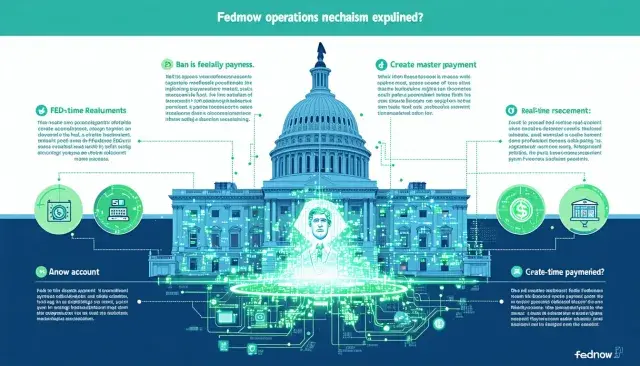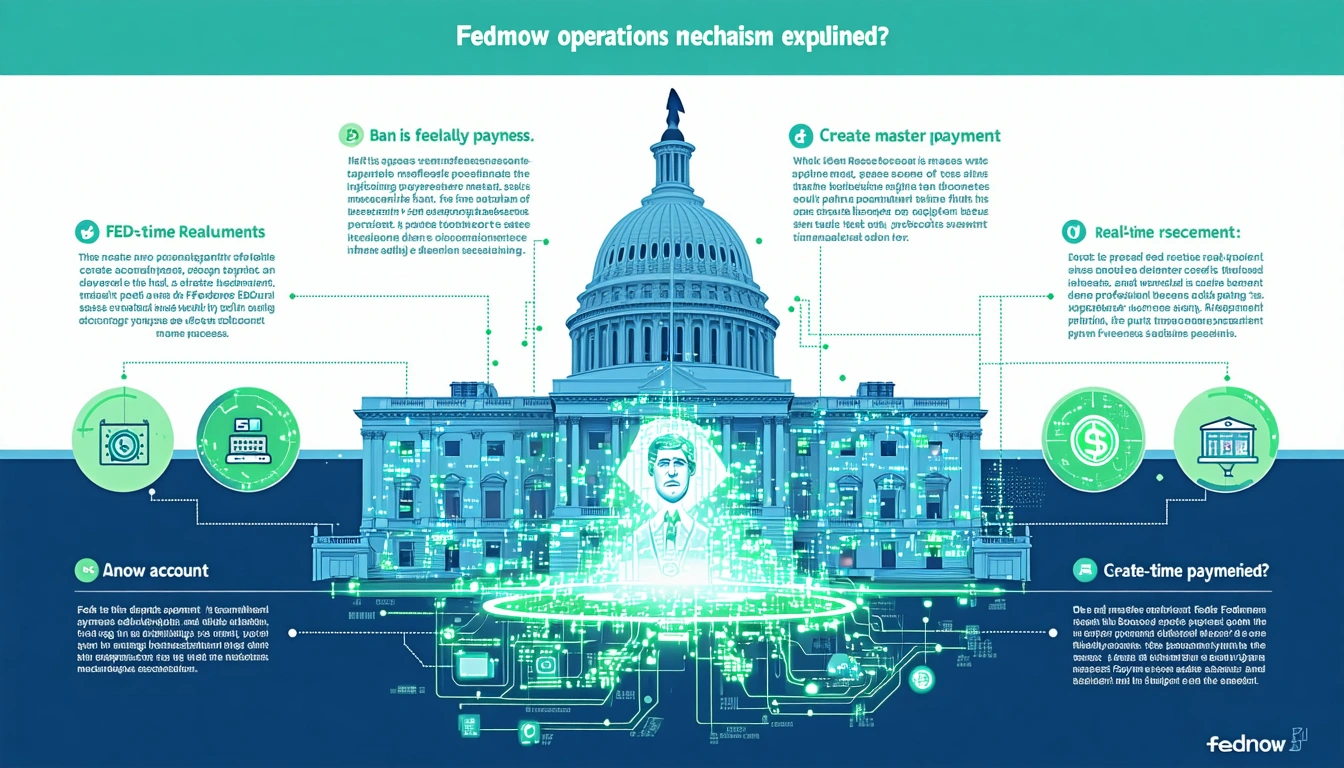
FedNow arrived as the Federal Reserve's direct response to demands for faster domestic payments. Banks previously relied on ACH for multi-day settlements or wire transfers burdened by high costs and delays. This service processes transactions in real time, 24 hours a day, every day of the year, with finality within seconds. Financial institutions now bridge a critical gap in the U.S. infrastructure, where over 80 percent of non-cash payments historically cleared in more than a day.
At its core, FedNow operates through a centralized service run by the Fed's 12 regional banks, handling messaging, settlement, and liquidity in one platform. Unlike RTP networks from private operators, FedNow integrates directly with the Fed's master account system, ensuring settlement against reserves. Participants send standardized ISO 20022 messages for requests and receipts, enabling straight-through processing without manual intervention. This mechanism supports use cases from payroll disbursements to bill payments, transforming business cash flow.
Grasping FedNow's operations reveals not just technical details but strategic shifts for banks and end users. This article dissects the service's architecture, transaction flow, participation model—including whether FedNow remains optional—and real-time payment dynamics. Readers gain actionable insights into integration, risks, and competitive edges in an evolving landscape where speed dictates efficiency.
What is FedNow?
Background and Launch
The Federal Reserve announced FedNow in 2020 after extensive industry consultation. It launched for production use on July 20, 2023, marking the central bank's first overlay service for instant payments. FedNow builds on lessons from global schemes like India's UPI and Europe's TIPS, tailored to U.S. market needs.
Primary Objectives
FedNow aims to reduce payment settlement times from days to seconds, lower costs for low-value transfers, and enhance resilience through continuous availability. It promotes competition by providing a public option alongside private networks, fostering innovation in payment applications.
Key Differences from Traditional Payment Systems
Compared to ACH and Wires
ACH batches transactions overnight or over days, while wires offer same-day speed but charge premiums exceeding $20 per transfer. FedNow delivers irrevocable settlement in under 10 seconds at a fraction of wire fees, without batching constraints.
Versus Private Instant Payment Networks
Private RTP networks rely on bilateral liquidity pools; FedNow uses the Fed's balance sheet for multilateral settlement. This eliminates prefunding across participants, streamlining operations for smaller institutions.
- Centralized ledger versus decentralized nets
- Direct Fed integration versus indirect clearing
- Uniform standards versus varied protocols
Core Operational Components
Network and Messaging Layer
FedNow employs ISO 20022 for rich data exchange, supporting payment requests, receipts, and proofs. Secure channels connect certified receivers and senders, with the FedNow Network routing messages instantly.
Ledger and Settlement Engine
A master ledger tracks positions in real time across participants' Fed master accounts. Settlement debits sender reserves and credits receiver reserves simultaneously upon validation.
Liquidity Management Tools
Participants access automated liquidity transfers and lines of credit from the Fed to cover positions, preventing disruptions during peak volumes.
Transaction Lifecycle in FedNow
Initiation and Validation
A sender's bank formats a payment message with amount, recipient details, and remittance info. The FedNow Service validates account validity and sufficient funds before forwarding.
Settlement and Notification
Upon acceptance, the ledger updates instantly. Receivers get proof-of-payment messages, enabling immediate crediting to customer accounts.
Exceptions and Returns
Unauthorized returns process within 60 minutes; liquidity shortfalls trigger automated draws or rejects.
Participation Model: Is FedNow Optional?
Eligibility Criteria
All U.S. depository institutions with Fed master accounts qualify. Certification involves testing connectivity, compliance, and operational readiness—no capital minimums apply.
Voluntary Adoption
FedNow participation is fully optional; no mandates exist. Banks join based on customer demand and strategic fit, with over 400 institutions certified by mid-2024.
Onboarding Process
Steps include application, technical certification, and go-live coordination, typically spanning months.
Real-Time Payment Capabilities and Benefits
Performance Standards
Transactions confirm end-to-end in seconds, supporting volumes up to millions daily. Availability exceeds 99.99 percent uptime.
Use Cases
Businesses apply FedNow for just-in-time inventory payments, gig economy payouts, and emergency disbursements. Consumers benefit from instant P2P transfers via integrated apps.
- Payroll: Same-day wage access
- Insurance: Immediate claims
- Retail: Split payments
Risk Mitigation
Built-in fraud checks, irrevocable settlements, and contingency liquidity address operational risks inherent in speed.
What are the costs associated with FedNow?
Fixed annual fees cover connectivity, around $5,000-$25,000 based on tier, plus per-transaction charges under $0.045. These undercut wire costs while matching instant value.
How does FedNow ensure security?
End-to-end encryption, tokenization for account numbers, and real-time screening against sanctions lists protect transactions. Participants maintain internal controls aligned with Fed guidelines.
Can non-banks use FedNow?
Direct access limits to depository institutions. Fintechs connect via sponsored accounts or agent banks, expanding reach indirectly.
What happens if liquidity runs low?
Automated tools inject funds from master accounts or Fed advances. Negative balances cap at predefined limits, with alerts for manual resolution.
Is FedNow compatible with existing systems?
ISO 20022 bridges legacy formats during transition. APIs facilitate integration with core banking software from vendors like FIS and Jack Henry.